


Globalización y pobreza: propulsores de las
migraciones internacionales contemporáneas
Globalization
and Poverty: Drivers of Contemporary International Migrations
 Jorge Antonio Herrera-Llamas
Ph.D en Ciencias de la Educación. Máster en Desarrollo
Económico.
Docente Universidad de Cartagena y Universidad de San
Buenaventura.
Correo electrónico: jaherrerallamas@gmail.com.
ORCID ID: https://orcid.org/0000-0001-8244-3961.
José Alejandro Alvarado-De Lima
Máster
en Derecho de Integración Económica. Director programas de administración de
negocios y administración de Comercio Internacional de la Universidad de San
Buenaventura Cartagena.
Correo: jode.alvarado@usbctg.edu.co.
ORCID ID: https://orcid.org/0000-0002-3744-9114
Liceth Herrera-Aguilar
Estudiante Administración de Empresa Universidad de
Cartagena.
Correo: liceth.ha@gmail.com
ORCID ID: https://orcid.org/0000-0002-9749-8268
En las postrimerías del siglo XX la pobreza y el
desencanto en la promesa de un mundo mejor, inmerso en el paradigma de la
globalización como resultado de los adelantos en las telecomunicaciones y en el
transporte, estimularon los flujos migratorios nacionales, regionales e
internacionales. En consecuencia, se aceleró el crecimiento de las ciudades sin
ninguna planificación, desarrollándose una nueva forma de vida periurbana
marcada por el encuentro de diferentes etnias y formas de vida diversas que
definen las principales áreas metropolitanas del mundo. La presente
investigación analiza los factores económicos y sociales que encarna la
migración como resultados de la pobreza y de la globalización. Desde el punto
de vista epistemológico, se utiliza el método analítico que permite examinar
las diferentes variables y sus relaciones de asociación en un contexto global;
la frustración en la modernidad y el funcionalismo tecnológico, como esperanza
de progreso económico y social, se manifiestan en la brecha entre el mundo rico
y el mundo pobre; el éxodo constituye una salida ante la fallida globalización
que no dio/da los resultados esperados en materia de reducir la desigualdad.
Palabras clave: Pobreza;
migración; globalización; urbanización
Abstract
In
the late twentieth century, poverty and disenchantment in the promise of a
better world, immersed in the paradigm of globalization, as a result of
advances in telecommunications and transport, stimulated national, regional and
international migration flows. As a result, the growth of the cities
accelerated without any planning, which led to a new form of peri-urban life,
marked by the meeting of different ethnicities and diverse life forms that
define the main metropolitan areas of the world. The present investigation
analyzes the economic and social factors that embody migration, as a result of
poverty and globalization. From the epistemological point of view, the
analytical method is used to examine the different variables and their
relations of association in a global context, where frustration in modernity
and technological functionalism (as a hope for economic and social progress) is
manifested in the gap between the rich world and the poor world; where the
exodus constitutes an exit before the failed globalization that did not give
the expected results in terms of reducing inequality.
Keywords: Poverty; Migration;
Globalization; Urbanization
Tipología: Artículo de reflexión
Recibido: 27/02/2018
Evaluado: 15//04/2018
Aceptado: 03/05/2018
Disponible
en línea: 00/00/2018
Cómo citar este artículo: Herrera-Llamas, J.A., Alvarado-De Lima, J.A.,
Herrera-Aguilar, L. (2018). Globalización y pobreza: propulsores de las
migraciones internacionales contemporáneas. Jangwa Pana, 17(3), XX-XX. Doi: http://dx.doi.org/10.21676/16574923.2491
Introducción
El Norte global y el
Sur global constituyen los nuevos arquetipos léxicos de los teóricos del
desarrollo que con argumentos etimológicos intentan describir una realidad de
desigualdad y marginación, configurada en una profunda brecha entre el mundo
rico y el mundo pobre. Es en este contexto donde fallece cualquier tecnicismo
teórico cuyos fundamentos, inexorablemente, parecen concurrir en la creencia de
que la pobreza es algo connatural a ciertas regiones condenadas a ser excluidas
del progreso económico y social.
Así, han surgidos
teorías pesimistas que consideran a estas comunidades inmersas en un círculo
vicioso de la pobreza imposible de romper. Infortunadamente, pareciera que las
estadísticas dieran la razón a estos tratadistas. Por ejemplo: mientras países
del Norte global como Noruega y Suecia exhiben ingresos per cápita superiores a
82.000 dólares anuales, países del sur Global como Sierra Leona y Níger no
llegan a los 400 dólares al año.
El informe de la Organización de las Naciones
Unidas para la Alimentación y la agricultura (FAO), en el año 2017,intitulado:
El futuro de la alimentación y la agricultura: Tendencias y desafíos, se
evidencia como principales tendencias contemporáneas el crecimiento
demográfico, la urbanización y el envejecimiento de la población. En
consecuencia, la humanidad se enfrenta a grandes desafíos entre los que
sobresalen: el mejoramiento de la productividad agrícola, la eliminación de la
pobreza extrema, reducir la desigualdad y abordar el fenómeno de las
migraciones (FAO, 2017).
La organización Internacional para las
Migraciones (OIM) resalta la existencia de 232 millones de migrantes
internacionales y 740 millones de migrantes internos con el aditivo de que más
del 50 % de estos migrantes residen en diez países altamente urbanizados y de
altos ingresos (OIM, 2015).
La Organización para la cooperación y el
Desarrollo Económico (OCDE) concibe el desarrollo económico de los países
emergentes como un motor de las migraciones voluntarias, mientras que los
países en desarrollo constituyen el principal destino de los refugiados (OCDE,
2017). Es en este contexto donde el
debate sobre la realidad, causas y consecuencias de las migraciones cobra una
utilidad científica y social. El presente artículo analiza cómo la pobreza
impulsa los flujos migratorios y cómo esta patología social ha encontrado un
escenario propicio, enmarcado en un proceso de globalización y una economía de
mercado excluyente (Cordera, 2017).
Desde el punto de
vista metodológico se aborda la problemática utilizando el método analítico.
Por consiguiente, el fenómeno de las migraciones contemporáneas se somete al
examen de las principales variables que lo generan, y cuya deconstrucción
metodológica busca dar respuesta al interrogante ¿de qué manera la pobreza y una
globalización que acelera la desigualdad impulsan los flujos migratorios
contemporáneos?
El paradigma de la globalización frente a la pobreza y a la migración
En las postrimerías
del siglo XX e inicio del presente milenio se acentuaron las crisis cíclicas
del capitalismo donde la racionalidad capitalista es frustrada por las
inequidades del sistema. Los valores animados por el logro de la trascendencia
del hombre fueron minados por la pobreza y el desencanto en las promesas de un
mundo mejor, inmerso en el paradigma de la globalización que con las proezas de
la ciencia y de la tecnología prometía una aldea global sin fronteras. En este
nuevo contexto económico, social y cultural, la razón no parece explicar a
cabalidad la verdad y el comportamiento del individuo. Así la célebre máxima
del padre de la modernidad Renato Descarte “pienso luego existo” sucumbe en un
universo donde la cotidianidad es animada por valores asociadas al mercado; en
consecuencias, en esta sociedad mediática se existe si se consume, con razón o
sin razón.
Las
telecomunicaciones y el transporte facilitaron los flujos de migraciones
nacionales, regionales e internacionales. Así, se aceleraron los procesos de
urbanización y se incrementó la multiplicidad cultural de las ciudades, y los procesos
de asimilación que se van generando entre poblaciones y estilos de vida
heterogéneos en las principales áreas metropolitanas del mundo (Cerón, 2017;
Herrera, 2014).
No obstante, la
modernidad y el funcionalismo tecnológico exasperado, prometían la difusión del
progreso económico y social a escala global. Lo cierto es que se ha seguido
abriendo la brecha entre el mundo rico y el mundo pobre y la prometedora
globalización no dio los resultados esperados en materia de reducir las
desigualdades (Figura 1).
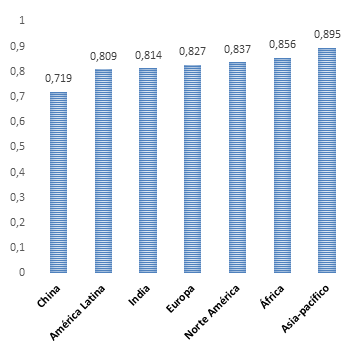
Figura 1. Índice de Gini de concentración de la
riqueza por regiones del mundo 2014
Fuente: OXFAM.
Así, el informe de
la ONG OXFAM (2016) revela que el 1 % más rico de la población mundial ostenta
más riqueza que el 99 %. Según esta misma organización, 200 empresas, entre
ellas las más grandes del mundo y las socias estratégicas del Foro Económico
Mundial de Davos, el 90 % funcionan en paraísos fiscales. Estas cifras dan
razón de ser de como la inversión en estos paraísos fiscales se ha
cuadruplicado en menos de 15 años presentándose una concentración de la riqueza
y en la práctica, una evasión fiscal disfrazada (OXFAM, 2016).
De tal manera se
propicia la configuración de un círculo vicioso en medio de la paradoja del
modelo económico en el que conviven simultáneamente: el crecimiento económico,
la pobreza estructural y las crisis fiscales recurrentes que perpetúan la
miseria y limitan las oportunidades de la redistribución de la riqueza. Esta
situación constituye una especie de combustible social y económico que aviva
los riesgos económicos, ambientales, geopolíticos, sociales y tecnológicos que
el Foro Económico Mundial describe en el Informe Riesgos Globales 2016 en los
cuales destaca el calentamiento global, el desplazamiento, la desigualdad, los
delitos cibernéticos y las crisis fiscales como grandes fenómenos que ponen en
peligro a las sociedades contemporáneas y a las generaciones futuras (World
Economic Forum, 2016).
En esta
investigación se hace énfasis en la desigualdad económica y social, porque en
el estado actual del fenómeno de la pobreza se convierte en causa y a la vez es
resultado de la miseria en que vive un considerado número de la población
mundial excluida del progreso económico y social. Son los pobres del campo y
los habitantes indeseados de los cordones de miseria de las urbes modernas los
que miran/ven en las fronteras fácticas e imaginarias un límite a romper; como
una de las pocas oportunidades de ser partícipe de esta sociedad global y de
los adelantos científicos y tecnológicos (Kliksberg, 2014).
El proceso de globalización amplió la brecha
entre ricos y pobres. La creencia de ser un ciudadano global, partícipe de la
sociedad de la información y de la sociedad del conocimiento, fue el señuelo
con que se vendió el paradigma. Las promesas de un mundo mejor han ido
posponiéndose en el tiempo. Primero en la cumbre del milenio de la ONU se
vendió la receta de los Objetivos de Desarrollo del Milenio y se daba por
seguro el fin de la pobreza extrema y el hambre para el año 2015; al vencerse
este plazo, de nuevo se siembran esperanzas en los llamados Objetivos de
Desarrollo Sostenible que postergan para el año 2030 el fin de los males
endémicos de esta sociedad capitalista. Lo cierto es que la riqueza siguió
concentrándose con el transcurrir del tiempo llegando a una situación actual
donde regiones como África sud sahariana tiene un Ingreso Nacional Bruto per
cápita por debajo de los 2000 dólares,contrastando esto con América del norte, cuna del sueño americano
para los migrantes, que obstenta un Ingreso Nacional Bruto per cápita de 55.117
dólares (Rodas, 2015) (Tabla 1).
Tabla 1. Regiones del mundo. Ingreso Nacional
Bruto per cápita 2015 (USD)
|
REGIÓN
|
INB
PERCÁPITA
|
|
África al sur del Sara
|
1.631
|
|
América Latina y el Caribe
|
8.688
|
|
América del Norte
|
55.117
|
|
Asia Meridional
|
1.535
|
|
Países de la zona Euro
|
37.546
|
Fuente: Datos del Banco Mundial. Informe anual
2016. (Método Atlas)
La brecha se hace
más evidente si se observa que países como Noruega y los Estados Unidos de
América ostentan unos ingresos per cápita de USD 93.550 y 55.980 dólares
respectivamente. En consecuencia, el Sur se cansó de esperar que, por ósmosis,
llegara el progreso del Norte.
Así el éxodo contemporáneo constituye una de
las facetas más reprochable de los estragos que ha dejado un modelo donde se
endiosa al mercado, generando mayores desigualdades e injustica social.
La economía de
mercado, con su lógica axiomática de la competencia, convirtió a la sociedad en
un campo de batalla por los recursos; el día a día es una lucha sin cuartel por
la supervivencia del más competitivo, del más fuerte. En realidad, es un escenario
donde se recrea y reproduce una especie de darwinismo social en el ámbito
local, nacional, regional e internacional.
Nigeria, Libia, Sudáfrica y Costa
de Marfil en el África son receptores de sus vecinos más pobres de África;
Alemania, Francia Gran Bretaña, Países Bajos y España receptores de las crisis
humanitaria del Medio Oriente, la falta de oportunidades de África y del Sur de
Asia; Chile, Brasil y Costa Rica constituyen la promesa de mejorar el nivel de
vida de un considerable número de migrantes latinoamericanos; Estados Unidos,
por su parte, sin importar los giros de su política internacional es el
receptor del sueño americano anidado en
México, Centroamérica, América Latina y el Caribe.
El problema de la
movilidad humana contemporánea se vuelve más complejo cuando se le suman los
grandes conflictos políticos como el conflicto en Siria y la crisis humanitaria en Venezuela, que ponen
en tela de juicio la sostenibilidad del actual orden económico internacional y
la convivencia pacífica de la humanidad. Sin duda alguna, la guerra en Siria
constituye el fogón de desequilibrio del Medio oriente para el mundo. Así, la
violación de los derechos humanos, la pobreza extrema, los homicidios
indiscriminados, el aislamiento y exterminio de familias enteras, al igual que
el bloqueo al abastecimiento de alimentos, agua potable y medicamentos
esenciales muestran al mundo una vil violación del derecho internacional
humanitario.
En consecuencia, en
la presente década, más de 5 millones de sirios han tenido que salir de sus
lugares habituales de residencia en
medio de una cruel lucha por el poder en la
que confluyen diversos protagonistas locales, regionales e
internacionales enmarcados en clanes, familias y grupos religiosos: sunitas,
chiitas, kurdos y yihadistas e intereses de potencias como Siria, Rusia e Irán
frente a potencias occidentales como Estados Unidos, Reino Unido y Francia.
Al margen de todo
este proceso de expulsión y recepción humana se ha engendrado una especie de
eugenesia social y económica; que muestra al mundo el ideario del inmigrante
como un ser extraño, peligroso e intruso, sometido a toda clase de
discriminación y xenofobia. Estos aspectos de discriminación y exclusión contrastan
con el carácter incluyente y global con que se pregonó el nuevo orden económico
y social internacional (Villela y Linares, 2011).
Las grandes
metrópolis representan el escenario amorfo donde los prodigios de los adelantos
tecnológicos y la multiculturalidad de las ciudades globales conviven con las
penurias y la marginalidad de los barrios subnormales, habitados en su mayoría
por inmigrantes nacionales expulsados por la pobreza del sector rural e
inmigrantes internacionales que detrás del sueño de mejorar su nivel de vida
engrosan los cinturones de miseria de la modernidad. Autores como Jordi Borja y Manuel Castells
(1997) (en el libro: Local y Global resalta las tensiones a que está sometida
la convivencia de las ciudades modernas en conflicto entre lo local y lo global
al plantear:
Lo
global se localiza, de forma socialmente segmentada y espacialmente segregada,
mediante los desplazamientos humanos provocados por la destrucción de viejas
formas productivas y la creación de nuevos centros de actividad. La
diferenciación territorial de los dos procesos, el de creación y el de
destrucción, incrementa el desarrollo desigual entre regiones y entre países, e
introduce una diversidad creciente en la estructura social urbana (p.36).
En la migración
internacional contemporánea en América Latina y el Caribe convergen factores
económicos, políticos y sociales que dan vigencia a los grandes flujos
migratorios inicialmente intrarregional, pero con la expectativa de tomarlo
como tránsito hacia países de Norteamérica y Europa, que en sus imaginarios
representan un futuro mejor para sus familias. Las tensiones políticas por los
desaciertos del modelo económico conocido como el socialismo del siglo XXI
mantienen a la región en constantes tensiones diplomáticas, dificultando las
relaciones internacionales. Países como Venezuela, Bolivia, Ecuador, Nicaragua
y Cuba siguen poniendo a prueba la capacidad real de los organismos
multilaterales como la Organización de las Naciones Unidas (ONU) y la
Organización de los Estados Americanos (OEA) en la resolución de los
conflictos.
En el estudio
Dinámicas migratorias en América Latina y el Caribe (ALC), y entre ALC y la
Unión Europea publicado por La Organización Internacional para las Migraciones
(2015) se refleja que entre los componentes macro, meso y micro que originan
los flujos migratorios sobresalen los factores políticos y de extrema pobreza y
desigualdad reinante en la región (Garay, Pérez, Changala, y Córdova, 2017)
(Tabla 2).
Tabla 2. Niveles de motivaciones explicativas
de los flujos migratorios América latina y el Caribe – Unión Europea
|
NIVEL
|
MOTIVACIONES
|
|
Macro
|
Los estímulos para migrar
se encuentran en factores estructurales, como son las políticas públicas y
los niveles de desigualdad entre países y/o la diferencia salarial entre
regiones o países vecinos. (p. 25)
|
|
Meso
|
Una vez creados los circuitos migratorios, las
motivaciones en este nivel se basan en las relaciones construidas por
individuos a partir de la comunicación e interacción entre los migrantes en
el lugar de destino y las personas que aún no migran y permanecen en las
localidades de origen. (p. 25).
|
|
Micro
|
En este nivel, la decisión
de migrar se basa en estrategias personales o familiares para enfrentar y
superar las dificultades encontradas en los lugares de residencia. (p. 25).
|
Fuente: Organización Internacional para las
Migraciones (OIM). Oficina Regional para el Espacio Económico Europeo, la Unión
Europea y la OTAN. Dinámicas migratorias en América latina y el Caribe.
No existe ninguna
duda sobre la relación entre el nivel de desarrollo desigual de los países de
origen y los países de destino con los flujos migratorios. La desigualdad, en
oportunidades económicas y sociales, alienta la movilidad no solo en el ámbito
campo-ciudad al interior de las naciones sino que es consecuencia de diversos
factores y barreras económicas, políticas y sociales que históricamente ha
generado la patología social de la miseria (Pardo, 2015). La movilidad humana,
en busca de mejores condiciones de vida, no podrá detenerse mientras más de la
mitad de la población del mundo carezca de los servicios esenciales de la salud
en plena era de la cibernética, la nanotecnología y la robótica (Banco Mundial,
2017).
Un mundo urbano es insostenible
La movilidad global,
materializada en una migración animada por la búsqueda de nuevas oportunidades
en los países de destino, constituye la configuración urbana contemporánea. En
efecto, según datos de la Organización Mundial para las Migraciones (OIM) cada
semana hay tres millones de personas en el mundo que se trasladan a las
ciudades, esta dinámica ha llevado a que el 20 % de los migrantes
internacionales actualmente vive en una de las 20 ciudades más pobladas del
mundo (OIM, 2015).
Si a las anteriores
cifras, sobre el comportamiento urbano de la movilidad humana contemporánea,
donde ciudades como Sídney, Londres y Nueva York, los migrantes
representan la tercera parte de la
población y que los países subdesarrollados están llamados a ser urbano como
resultado de la pobreza y la violencia en el campo el debate sobre la consecuencias
de este fenómeno no debe circunscribirse únicamente a la planeación y el
desarrollo urbano como objetivos de la política pública, pues de nada servirán
sus recetarios citadinos si no avizoran el grave problema de la seguridad
alimentaria en que desembocará el desarraigo campesino (Galindo-Vignoli y
Acuña-Barquero, 2016).
Es preocupante el
informe de la Organización de las
naciones Unidas para la Alimentación y la Agricultura FAO (2017) donde se
registra el incremento en un 35 % el
número de personas en el mundo con inseguridad alimentaria severa (FAO, 2017).
En síntesis, la
migración como fenómeno urbano contemporáneo enmarcado en nuevas generaciones
étnicas, demográficas, económicas y sociales producto del encuentro de
disimiles culturas, representa un reto de corto plazo para la administración de
las ciudades; pero a su vez en el mediano y largo plazo, constituye un problema
para la estabilidad económica y social global.
En este sentido, no bastará con correctivos de
políticas económicas coyunturales que mejoren, de alguna manera, los servicios
de salud, trabajo y vivienda de los migrantes en los países de destino. Estas
medidas paliativas marginalitas, al igual que las políticas laborales de corte
neoclásicas, deben ser revaluadas ante lo complejo de las migraciones
contemporáneas. Igualmente, tampoco basta estudiar el dinamismo de mercado que
generan las remesas como producto de esta situación. El problema requiere de
una visión estructural, despojado de cualquier eufemismo y que entienda que es
en la desigualdad creciente y en la pobreza de un considerable porcentaje de la
población mundial donde radica el germen que origina la movilidad humana.
Según datos del
Banco mundial en el año 2015, el porcentaje de la población urbana en el mundo era
de 54 %; lo que representa aproximadamente 3.947 millones de personas
disputando los servicios y los espacios urbanos, pero a su vez una marcada
dependencia alimentaria de la producción campesina. Indiscutiblemente, al
discurso academicista sobre el cambio climático, deterioro del medio ambiente,
detrimento en la biodiversidad y todo el recetario sobre el manejo paliativo
del fenómeno de la migración, hay que agregarle, sin atenuantes, políticas
estructurales que ataquen las verdaderas raíces del problema de la pobreza y la
desigualdad.
La sostenibilidad, enmarcada en un contexto
integral, significa un equilibrio entre las necesidades y los recursos
disponibles en el tiempo y en un espacio global; por consiguiente, no basta que
ciudades modelos en el mundo declaren satisfactorios logros de sustentabilidad
urbana, en ese plano individual apenas constituye una convivencia condicionada
que inexorablemente será minada por el desequilibrio global. En contraste a
estas medidas de choque, esencialmente se trata de llevar a la práctica las
promesas del pasado que en tantas declaraciones de organismos multilaterales
quedaron como compendios históricos de fracasos. Así, se observa que el cambio
de milenio trajo nuevos anuncios que comprometía a la Organización de las
Naciones Unidas con brindar soluciones sostenibles al problema de la pobreza en
el mundo; esta visión integral de política económica y social constituía el
atractivo de los llamados Objetivos de Desarrollo del Milenio en la cual la
asamblea general de la ONU en la declaración del milenio entre sus valores y
principios planteó:
No
debemos escatimar esfuerzos por liberar a toda la humanidad, y ante todo a
nuestros hijos y nietos, de la amenaza de vivir en un planeta irremediablemente
dañado por las actividades del hombre, y cuyos recursos ya no alcancen para
satisfacer sus necesidades (p. 6).
En consonancia con
la nueva visión del desarrollo expresada en la Cumbre del Milenio de la
Naciones Unidas, el Banco mundial en año 2001 diseñó estrategias de sostenibilidad
basadas en la distribución equitativa del desarrollo haciendo énfasis en la
disminución de la pobreza (Banco Mundial, 2001).
Transcurridos tres
quinquenios los objetivos no se cumplieron satisfactoriamente, pese al manejo
cuestionado de metodología, artificio y modulación de guarismos para
cuantificar los logros en materia de reducción de la pobreza. En estas
circunstancias, se posterga la promesa de un mundo mejor al año 2030, se somete
al mundo a nuevos experimentos bajo la tutela de los Objetivos de Desarrollo
Sostenible.
Discursos
academicistas, tachonados de los tecnicismos del lenguaje de moda en el momento
y que al unísono con los pobres del mundo han migrado consuetudinariamente al
olvido. En consecuencia, los llamados países del sur, víctimas propicias de una
globalización fallida y de experimentos disímiles de modelos económicos de
prueba y error, en plena era de adelantos sin precedentes en la ciencia y en la
tecnología exponen cifras vergonzosas como se observa en la tabla 3. donde países
del norte como Noruega, Austria, Suiza y Suecia presentan una Tasa de
mortalidad materna entre cuatro y cinco por cada 100.000 nacidos vivos; en
contraste, países como Sierra Leona, Liberia y Gambia exhiben mortalidad
materna de 1360 725 Y 706 respectivamente (UNFPA, 2016).
Tabla 3. Contraste entre países ricos y países
pobres. Indicadores sociales 2016
|
País
|
Tasa de Mortalidad Materna
|
Índice de desarrollo humano (IDH)
|
Ingreso per cápita
|
|
Noruega
|
5
|
0,949
|
82.330
|
|
Austria
|
4
|
0,939
|
45.230
|
|
Suiza
|
5
|
0,939
|
81.240
|
|
Suecia
|
4
|
0,913
|
54.630
|
|
Gambia
|
706
|
0,452
|
440
|
|
Liberia
|
725
|
0,427
|
370
|
|
Guinea
|
679
|
0,414
|
490
|
|
Sierra Leona
|
1360
|
0,420
|
490
|
|
Níger
|
553
|
0,353
|
370
|
Fuente: Fondo de población de las Naciones
Unidas. Estado de la Población Mundial 2016. Informe sobre Desarrollo Humano
2016. Banco Mundial 2016.
En síntesis,
prescindiendo de la simple connotación espacial en la lógica escalonada del
proceso migratorio, los países del sur realmente no se han urbanizado; en la
práctica, las ciudades receptoras de la movilidad humana sufren un proceso de
ruralización puesto que, ante la incapacidad fáctica de poder responder a las
múltiples y complejas necesidades de los inmigrantes, éstos no adoptan la vida
citadina, configurándose ciudades amorfas.
Conclusiones
Las razones
geográficas, históricas, sociológicas, demográficas y hasta psicológicas que
sirven de sustento a todo un mosaico de teorías, que desde lo disciplinar, pretenden
definir causas o efectos de la migración, se quedan cortas frente a la magnitud
del problema. Lo cierto es que en las postrimerías del siglo XX y en lo
transcurrido del presente milenio, las principales causas del desarraigo están
infaliblemente ligadas a fenómenos económicos y sociales que configuran un
contexto de miseria y de desigualdad creciente.
Es en la desigualdad
global, la concentración del capital financiero e industrial, la brecha digital
y la marginalidad social de un considerado porcentaje de la población mundial,
donde se encuentran las causas de la patología social de la pobreza, que es
realmente el problema. La luchan sin cuartel por los mercados, por los recursos
por la vida, ha convertido al mundo en un escenario de darwinismo social en el
cual las otrora fronteras geográficas fácticas se derrumban, no como resultado
de las promesas de la globalización sino como evidencia inexorable del
desencanto de los pobladores de los países, denominados, en vía de desarrollo.
El debate sobre el fenómeno de las migraciones
domésticas e internacionales se debe despojar de la acción mediática de los
discursos de tintes academicistas y que con vocabularios acomodaticios
confunden las definiciones con las verdaderas soluciones de los problemas de miseria
que viven las comunidades marginadas de las proezas de la globalización. En
consecuencia, los habitantes de los eufemísticamente denominados países del Sur
global marchan hacia el Norte Global, puesto que se cansaron de esperar el
progreso en sus territorios y de ser víctimas propicias de una globalización
fallida. En consecuencia, la pobreza y un orden económico internacional
fracasado, unido a la inestabilidad política enmarcado en grandes conflictos
como la guerra civil en Siria en el medio Oriente y la crisis humanitaria de
Venezuela en América Latina, son factores que alimentan los flujos migratorios
internacionales.
En la práctica, los
pobres del mundo globalizado son extranjeros en todas partes, peregrinos
apátridas dado la ausencia de acciones estatales que realmente los proteja y
hagan valer su dignidad humana. Constituyen diásporas de la desigualdad,
huérfanas de oportunidades reales de cambiar sus condiciones de pobreza. Esta
patología social trasciende los factores de raza, idioma y cultura; encontraste,
forman una etnia cuyo elemento común es haber sido marginados, excluido de las
bondades que en otrora prometió la economía de mercado global.
Banco Internacional
de Reconstrucción y Fomento/ Banco Mundial. (2001). Informe sobre el desarrollo
mundial. La lucha contra la pobreza. Recuperado de:
http://documents. worldbank.org/
Banco Internacional
de Reconstrucción y Fomento/ Banco Mundial. (2017). Informe anual 2017. Poner
fin a la pobreza extrema. Impulsar la prosperidad. Recuperado de http://www.bancomundial.org/
Cerón, A.C. (2017).
Más allá de la línea. Patrones migratorios entre México y Estados Unidos.
Frontera Norte, 8(15), 199-203.
Cordera, R. (2017).
Globalización en crisis; por un desarrollo sostenible. Economía UNAM, 14(40),
3-12.
Galindo, A.M.C.,
Vignoli, J.R., Acuña, M., Barquero, J., Macadar, D., da Cunha, J.M.P. y
Sobrino, J. (2016). Migración interna y cambios metropolitanos: ¿qué está
pasando en las grandes ciudades de América Latina? Revista Latinoamericana de
Población, 10(18), 7-41.
Garay, J., Feline,
L., Pérez, M., Changala, R., y Córdova, R. (2017). Dinámicas migratorias en
América Latina y el Caribe (ALC), y entre ALC y la Unión Europea. Bruselas,
Bélgica: Organización Internacional para las Migraciones, Oficina Regional para
América del Sur.
Informe de OXFAM.
(2016). Una economía al servicio del 1%. Acabar con los privilegios y la
concentración de poder para frenar la desigualdad extrema. Recuperado de
https://www.oxfam.org/es /informes/una-economia- al-servicio
Herrera, J. (2014).
Posmodernidad y educación: imperativos categóricos de la pobreza contemporánea.
Revista Latinoamericana de Bioética, 14(2), 80-89.
Borja, J., y
Castells, M. (2000). Local y global. La gestión de las ciudades en la era de la
información. Ciudad de México, México: Editorial Aguilar.
Kliksberg, B.
(2014). ¿Cómo enfrentar la pobreza y la desigualdad?: una perspectiva
internacional. Costa Rica:
Editorial UCR.
OECD. (2016). Perspectives on Global Development 2017:
International Migration in a Shifting World. Recuperado
de:
http://dx.doi.org /10.1787/persp_glob _dev-2017-en
ONU. (2000).
Declaración del Milenio de las Naciones Unidas. In Resolución 55/2 de la
Asamblea General de las Naciones Unidas. Oms New York.
(FAO, 2017).
El futuro de la alimentación y la agricultura Tendencias y desafíos.
www.fao.org/3/ a-i6583e.pdf
Organización
Internacional para las Migraciones. (2015). Informe sobre las migraciones en el
mundo. Los migrantes y las ciudades: nuevas colaboraciones para gestionar la
movilidad. París: OIM.
Pardo, A. (2015).
Migración internacional y desarrollo. Aportes desde el transnacionalismo.
Estudios Sociales, 54, 39-51.
Rodas, F.C. (2015).
Neoliberalismo, globalización y pobreza. Revista Trabajo Social, 1 27-48.
World Economic Forum. (2016). The Global Risks Report 2016. 11th
Edition. Recuperado de: http://www3.weforum.org /docs/GRR/WEF_GRR16.pdf
.
Villela, F. y
Linares, J. (2011). Eugenesia: Un análisis histórico y una posible propuesta.
Acta bioethica, 17(2), 189-197. doi:10.4067/S1726- 569X2011000200005.